How to Say Cool in Spanish: 11 Slang Words From 7 Countries
Chévere, chido, guay, bacán, copado: learn how to say cool in Spanish slang across 7 countries, with example lines, a quiz and a free cheat sheet.
Nativia Team
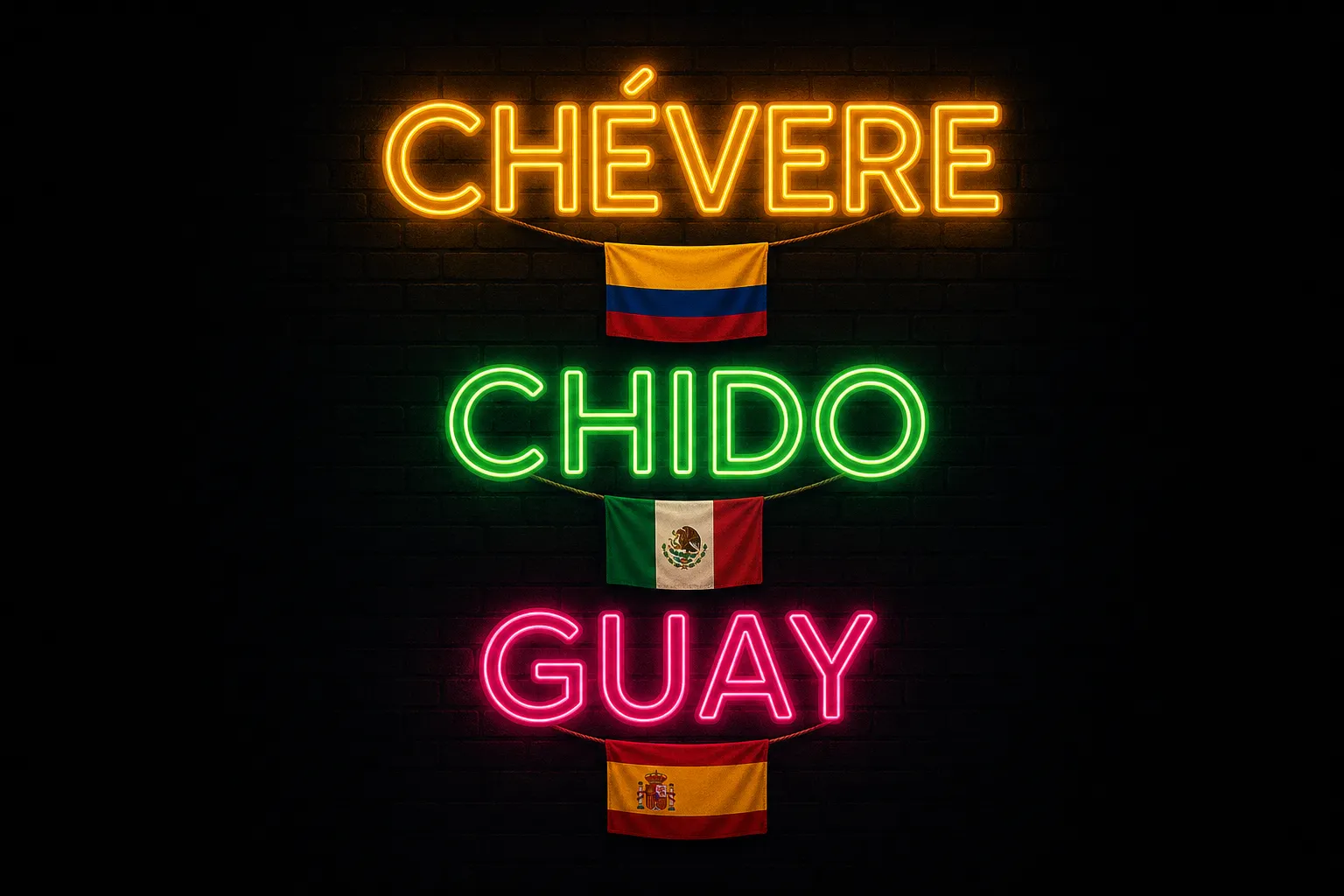
Textbooks give you genial and estupendo and send you on your way. Then you land in Medellín, say estupendo, and everyone hears a 1970s TV host. Nobody under 60 says that.
The problem is that "cool" has no single Spanish translation. Every country picked its own word, and a few of those words mean something embarrassing one border over. Here are the ones you will actually hear, sorted by where they live.
Quiz ahead: At the end of this article a short quiz tests you. Question 4 catches almost everyone who learned Spanish in Mexico.Colombia, Venezuela and the Caribbean: chévere and bacano
Chévere is the safest "cool" in Latin America. It started in Venezuela, took over Colombia, and now works in Peru, Ecuador, Cuba, Puerto Rico and the Dominican Republic. If you only learn one word from this list, learn this one.
¡Qué chévere tu apartamento! (Your apartment is so cool!)
Bacano is the Colombian upgrade. It is younger and a bit more street than chévere, and you will hear it constantly in Medellín and on the coast. Standard Spanish has no equivalent; it is pure slang.
El concierto estuvo muy bacano. (The concert was really cool.)
Mexico: chido and padre
Chido is the everyday Mexican "cool". It works for things, plans and people, and you can stretch it into chidísimo when something is amazing.
Está chido tu plan, vamos. (Your plan is cool, let's go.)
Padre literally means father, but in Mexico está padre means "it's great". Older speakers and families use it more than teenagers, who lean toward chido. Outside Mexico, padre is just a dad, so keep this one inside the country.
¡Qué padre que viniste! (How great that you came!)

Reading is step one. Speaking is what makes it stick.
Practice this in a real conversation, with instant feedback.
Spain: guay and mola
Spain ignored all of the above and uses guay. It works as an adjective and as a one-word reaction, and it has been stable for decades.
La fiesta fue muy guay. (The party was really cool.)
The verb molar is the Spanish way to say something is cool or that you like it. It conjugates like gustar: the thing that is cool is the subject.
Me mola tu chaqueta. (I like your jacket, it's cool.)
Say guay in Mexico and people will understand you, but they will immediately know where you learned your Spanish.
Argentina and Uruguay: copado and piola
Copado describes cool things and cool people in Buenos Aires and Montevideo. It comes from copar, to take over, and it means something won you over.
Tu hermano es re copado. (Your brother is really cool.)
Piola is subtler. It means cool in a relaxed, low-key way, and it also works for a smart move or a chill person. It is the word for things that are nice without being a big deal.
Tranqui, el lugar es piola. (Relax, the place is nice.)
Don't just memorize it. Say it out loud today.
Nativia turns what you just read into real conversations.
Chile and Peru: bacán and la raja
Bacán is the Chilean and Peruvian cousin of Colombian bacano. Same meaning, different ending. Peru uses it heavily, Chile pairs it with the half-swallowed vowels that make Chilean Spanish a challenge.
Qué bacán tu moto. (Your bike is so cool.)
La raja is Chile's strongest "awesome", and it is a trap. Raja on its own is a vulgar word for backside in most of the Spanish-speaking world. In Chile, es la raja is just enthusiastic. Everywhere else it sounds like you are describing anatomy.
El viaje estuvo la raja. (The trip was awesome.)
Central America: tuanis and pura vida
Tuanis is Costa Rican and Nicaraguan slang for cool or fine. The usual story says it comes from English "too nice", which is folk etymology, but it makes a good memory hook.
Todo tuanis, mae. (All good, dude.)
Pura vida is the Costa Rican answer to almost everything: hello, goodbye, thanks, cool, no problem. Use it there and you instantly sound like you have been around for a while.
¿Cómo estás? Pura vida. (How are you? All good.)
Watch out: three of these words change meaning once you cross a border.
- Padre means cool only in Mexico. Elsewhere it is just "father".
- La raja is cool only in Chile. Elsewhere it is vulgar.
- Chulo means cool or cute in Spain and Mexico, but in several South American countries it means pimp or a show-off. Skip it until you know the room.
The real skill is not memorizing all eleven. It is hearing which one the people around you use and switching within a day. Shadowing conversation scenarios with a Colombian voice one week and a Mexican voice the next, the way Nativia lets you, trains that ear faster than a list ever will.
Test yourself
Read each line and pick what the slang word means, then check your answers.
Pick the right meaning or word for each line, then check your answers.
1.A friend in Bogotá says: ¡Qué bacano tu carro! What does bacano mean?
2.In Madrid: Me mucho esta canción.
I really like this song, it's cool.
3.Which word is used almost everywhere in Latin America for cool?
4.Your Mexican roommate says: Está padre la película. What does padre mean here?
5.A Chilean says: La fiesta estuvo la raja. In Chile this means the party was:
6.In Buenos Aires: El bar es , tranqui y barato.
The bar is nice, chill and cheap.
Cheat sheet
How to say cool in Spanish, by country
| Word | Meaning | Where it's used | Example |
|---|---|---|---|
| chévere | cool, great | Venezuela, Colombia, Peru, Ecuador, Caribbean | ¡Qué chévere tu apartamento! (Your apartment is so cool!) |
| bacano | cool, awesome | Colombia | El concierto estuvo muy bacano. (The concert was really cool.) |
| chido | cool | Mexico | Está chido tu plan. (Your plan is cool.) |
| padre | great (only in Mexico, elsewhere father) | Mexico | ¡Qué padre que viniste! (How great that you came!) |
| guay | cool | Spain | La fiesta fue muy guay. (The party was really cool.) |
| molar | to be cool, to like (verb, like gustar) | Spain | Me mola tu chaqueta. (I like your jacket.) |
| copado | cool, likeable | Argentina, Uruguay | Tu hermano es re copado. (Your brother is really cool.) |
| piola | cool in a chill, low-key way | Argentina, Uruguay | El lugar es piola. (The place is nice.) |
| bacán | cool, awesome | Chile, Peru | Qué bacán tu moto. (Your bike is so cool.) |
| la raja | awesome (only in Chile, vulgar elsewhere) | Chile | El viaje estuvo la raja. (The trip was awesome.) |
| tuanis / pura vida | cool, all good | Costa Rica, Nicaragua | Todo tuanis, mae. (All good, dude.) |
Learn how people actually talk
Textbooks won't teach you this. In Nativia, the characters speak with real accents and real slang. Start talking with them today.
FAQ
What is the most universal way to say cool in Spanish?
Chévere covers the most ground in Latin America, and genial is understood everywhere but sounds a little flat. If you are in Spain, switch to guay.
Is it rude to use slang from another country?
Not rude, just noticeable. Saying guay in Lima will get a smile and a question about where you studied. The only real risks are the words that flip meaning, like padre, la raja and chulo.
Can I use these words at work or with older people?
Chévere, genial and está bien are safe with anyone. Bacano, chido, copado and la raja are for friends, bars and group chats, not for your landlord or your boss.
Keep reading
How to Say Cool in Spanish: 10 Words Locals Actually Use
Learn how to say cool in Spanish like a local: guay, chido, chévere, bacán and copado, with real examples, country warnings, a quiz and a cheat sheet.
Colombian Slang: 12 Words You'll Hear Every Day in Medellín
Learn 12 Colombian slang words you'll hear daily in Medellín and Bogotá: parce, bacano, chimba, guayabo and more, with examples, meanings and a quiz.
Argentine Slang: 12 Words You'll Hear Every Day in Buenos Aires
Learn Argentine slang the way porteños actually use it: che, boludo, quilombo, laburo and 8 more, with example lines, meanings and a free cheat sheet.