Ordering at a Restaurant in Spanish: Phrases From Table to Bill
Ordering at a restaurant in Spanish, step by step: getting a table, ordering food and drinks, asking for the bill, and what the waiter will say back.
Nativia Team
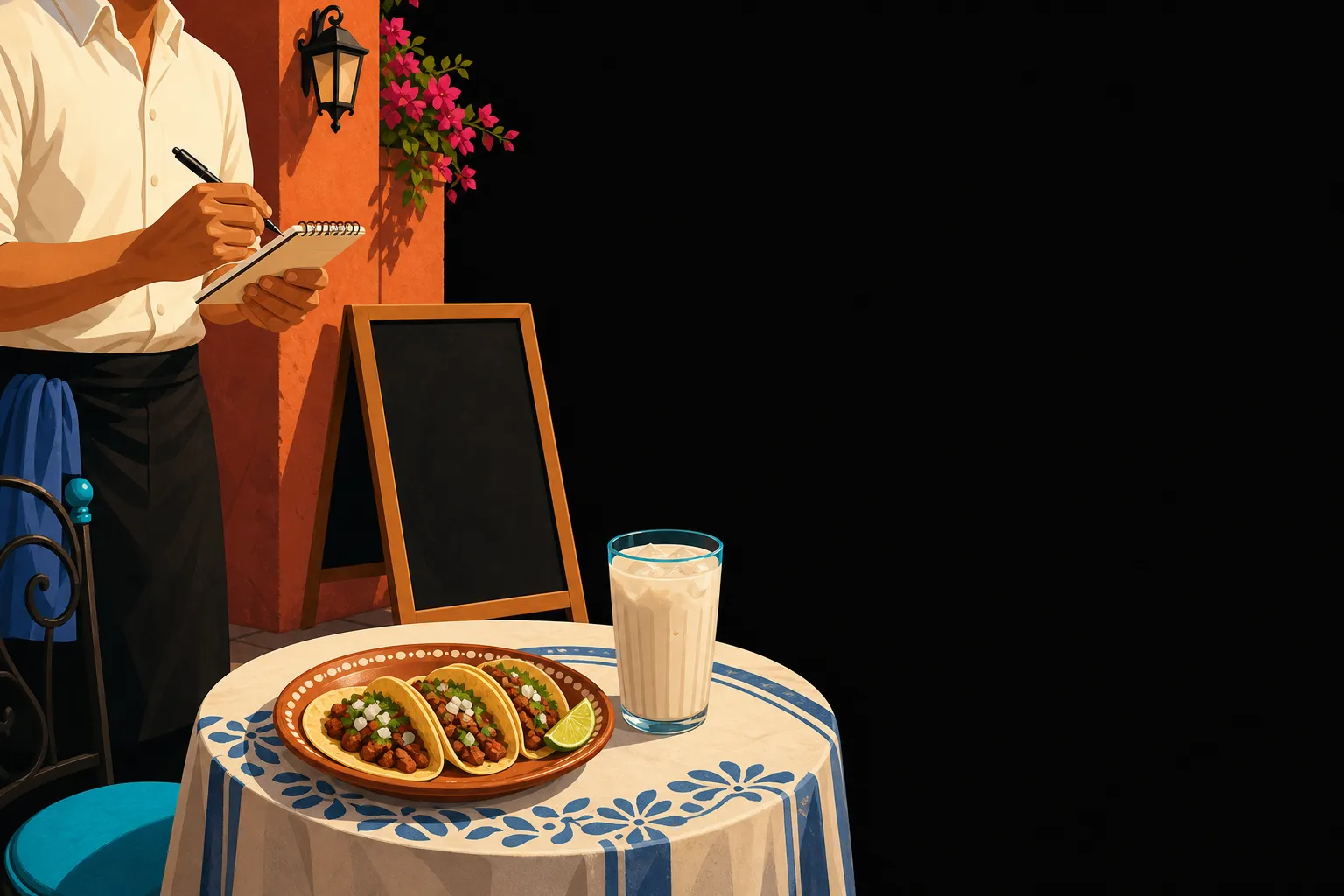
The first time I ate alone in Oaxaca, I nailed the order and then froze when the waiter asked ¿Algo más? I had no idea it meant "anything else?" I just nodded, and he brought me a second plate of guacamole.
A restaurant is the one situation you will face every single day in a Spanish-speaking country. The good news is that it follows a script. Learn the script, learn what the waiter says back, and you can relax and enjoy the food.
Quiz ahead: At the end of this article a short quiz tests you on the whole meal. Question 4 catches almost everyone.Step 1: Getting a table
Walk in, make eye contact, and say how many you are. Numbers plus one phrase is all it takes.
Una mesa para dos, por favor. (A table for two, please.)
¿Tienen mesa para cuatro? (Do you have a table for four?)
The host will usually ask one of these:
¿Tienen reserva? (Do you have a reservation?)
¿Dentro o fuera? (Inside or outside?)
Reply with No, no tenemos reserva. (No, we don't have a reservation.) or Fuera, por favor. (Outside, please.) In Spain you may also hear ¿En la terraza? for the outdoor seating.
Step 2: Drinks first
In most of Latin America and Spain, the waiter takes drinks before you touch the menu. Expect this question within a minute of sitting down:
¿Qué les traigo de tomar? (What can I bring you to drink?)
¿Algo de beber? (Something to drink?)
Your answers:
Para mí, una cerveza. (A beer for me.)
Un agua sin gas, por favor. (A still water, please.)
Agua con gas is sparkling water. If you want tap water in Spain, ask for agua del grifo. In most of Latin America, stick to bottled.

Reading is step one. Speaking is what makes it stick.
Practice this in a real conversation, with instant feedback.
Step 3: Ordering food
Two verbs do nearly all the work here: quiero (I want) and me trae (bring me). Both sound perfectly polite with a por favor at the end.
Quiero los tacos al pastor, por favor. (I'd like the tacos al pastor, please.)
¿Me trae el pollo con arroz? (Could you bring me the chicken with rice?)
¿Qué me recomienda? (What do you recommend?)
When you ask for a recommendation, be ready for a follow-up:
¿Le gusta el picante? (Do you like spicy food?)
¿Carne o pescado? (Meat or fish?)
For dietary needs, keep it short and direct:
Soy vegetariano. / Soy vegetariana. (I'm vegetarian.)
Sin cebolla, por favor. (Without onion, please.)
¿Esto lleva gluten? (Does this contain gluten?)
The verb llevar is the key one for ingredients. ¿Qué lleva? (What's in it?) works for any dish on the menu.
Step 4: During the meal
Once the food arrives, the waiter will check on you. This is where the question that got me extra guacamole comes in.
¿Todo bien? (Everything okay?)
¿Algo más? (Anything else?)
Answer Todo perfecto, gracias. (Everything is perfect, thanks.) or No, nada más, gracias. (No, nothing else, thanks.)
If you need something:
¿Me trae más pan? (Could you bring more bread?)
Disculpe, falta un tenedor. (Excuse me, a fork is missing.)
Disculpe is the word to get attention. Never snap your fingers or call ¡Oye! It is rude in every Spanish-speaking country.
Don't just memorize it. Say it out loud today.
Nativia turns what you just read into real conversations.
Step 5: The bill, and splitting it
This is where most learners go wrong, because the waiter will not bring the bill until you ask. Sitting and waiting is a rookie move. Catch the waiter's eye and say:
La cuenta, por favor. (The bill, please.)
¿Nos trae la cuenta? (Could you bring us the bill?)
To split it:
¿Podemos pagar por separado? (Can we pay separately?)
¿Se puede pagar con tarjeta? (Can I pay by card?)
A common reply in smaller places is Solo efectivo. (Cash only.) Carry some bills. Tipping varies: around 10 percent is standard in Mexico and Colombia, while in Spain rounding up a euro or two is fine.
Key takeaway:
- The waiter leads the script. Your job is to recognize the questions and answer short.
- You must ask for the bill. It will not come on its own.
Mini dialogue: a full meal in Mexico City
Mesero: Buenas tardes, ¿mesa para cuántos? (Good afternoon, table for how many?)
Tú: Para dos, por favor. (For two, please.)
Mesero: ¿Qué les traigo de tomar? (What can I bring you to drink?)
Tú: Dos aguas de jamaica. (Two hibiscus waters.)
Mesero: ¿Ya saben qué van a pedir? (Do you know what you're going to order?)
Tú: Sí, dos órdenes de enchiladas verdes. ¿Pican mucho? (Yes, two orders of green enchiladas. Are they very spicy?)
Mesero: Un poquito. ¿Algo más? (A little. Anything else?)
Tú: No, nada más, gracias. (No, nothing else, thanks.)
Mesero: ¿Todo bien? (Everything okay?)
Tú: Todo perfecto. ¿Nos trae la cuenta? (Everything's perfect. Could you bring us the bill?)
Mesero: Claro. ¿Juntos o separados? (Of course. Together or separately?)
Tú: Separados, por favor. (Separately, please.)
Self-test: what would you say?
Run through the meal and pick the best reply at each moment.
Pick the best phrase for each moment of the meal, then check your answers.
1.You walk in with three friends. What do you say?
2.The waiter asks: ¿Qué les traigo de tomar? What is he asking?
3.¿Esto gluten?
Does this contain gluten?
4.The waiter asks: ¿Algo más? You are done. What do you reply?
5.You want to get the waiter's attention politely.
6.¿Podemos pagar separado?
Can we pay separately?
Restaurant phrase cheat sheet
Ordering at a restaurant in Spanish
| Moment | You say | They might say |
|---|---|---|
| Arriving | Una mesa para dos, por favor. (A table for two, please.) | ¿Tienen reserva? (Do you have a reservation?) |
| Seating | Fuera, por favor. (Outside, please.) | ¿Dentro o fuera? (Inside or outside?) |
| Drinks | Un agua sin gas, por favor. (A still water, please.) | ¿Qué les traigo de tomar? (What can I bring you to drink?) |
| Ordering | Quiero el pollo, por favor. (I'd like the chicken, please.) | ¿Ya saben qué van a pedir? (Do you know what you'll order?) |
| Recommendation | ¿Qué me recomienda? (What do you recommend?) | ¿Le gusta el picante? (Do you like spicy food?) |
| Ingredients | ¿Qué lleva? (What's in it?) | Lleva cebolla y ajo. (It has onion and garlic.) |
| Dietary | Soy vegetariano. / Sin cebolla, por favor. (I'm vegetarian. / Without onion, please.) | Claro, sin problema. (Sure, no problem.) |
| Getting attention | Disculpe. (Excuse me.) | Dígame. (Tell me.) |
| Check-in | Todo perfecto, gracias. (Everything's perfect, thanks.) | ¿Todo bien? ¿Algo más? (Everything okay? Anything else?) |
| Bill | La cuenta, por favor. (The bill, please.) | ¿Juntos o separados? (Together or separately?) |
| Splitting | ¿Podemos pagar por separado? (Can we pay separately?) | Solo efectivo. (Cash only.) |
| Card | ¿Se puede pagar con tarjeta? (Can I pay by card?) | Sí, claro. (Yes, of course.) |
Rehearse this exact situation before it happens
Play the scene in Nativia as often as you like, so the right words are there when you need them for real.
FAQ
Is it rude to say "quiero" when ordering?
No. Quiero plus por favor is how natives order every day. Quisiera (I would like) is more formal and fine too, but you do not need it at a taco stand or a neighborhood bar.
How do I ask for the bill in Spanish without sounding impatient?
La cuenta, por favor with a smile is the standard. It is not pushy. Waiters expect it, and in most countries they will not bring the bill until you ask.
What is the difference between "mesero" and "camarero"?
Both mean waiter. Mesero is used in Mexico and most of Latin America. Camarero is the word in Spain. In Argentina you will also hear mozo. Any of them will be understood if you say it politely.
Keep reading
Buying a SIM Card in Spanish: Phrases From Counter to Signal
Buying a SIM card in Spanish made simple: the phrases to ask for a prepaid plan, hand over your passport, pick data, and get your number working, plus a quiz.
At the Pharmacy in Spanish: Phrases From Symptom to Dosage
Learn the Spanish pharmacy phrases you need: describe symptoms, ask for medicine, understand dosage instructions, plus a dialogue, quiz and cheat sheet.
Taking a Taxi in Spanish: Phrases From Pickup to Paying
The Spanish taxi phrases you actually need: hailing a cab, giving an address, agreeing on the price, and paying without getting overcharged.