Taking a Taxi in Spanish: Phrases From Pickup to Paying
The Spanish taxi phrases you actually need: hailing a cab, giving an address, agreeing on the price, and paying without getting overcharged.
Nativia Team
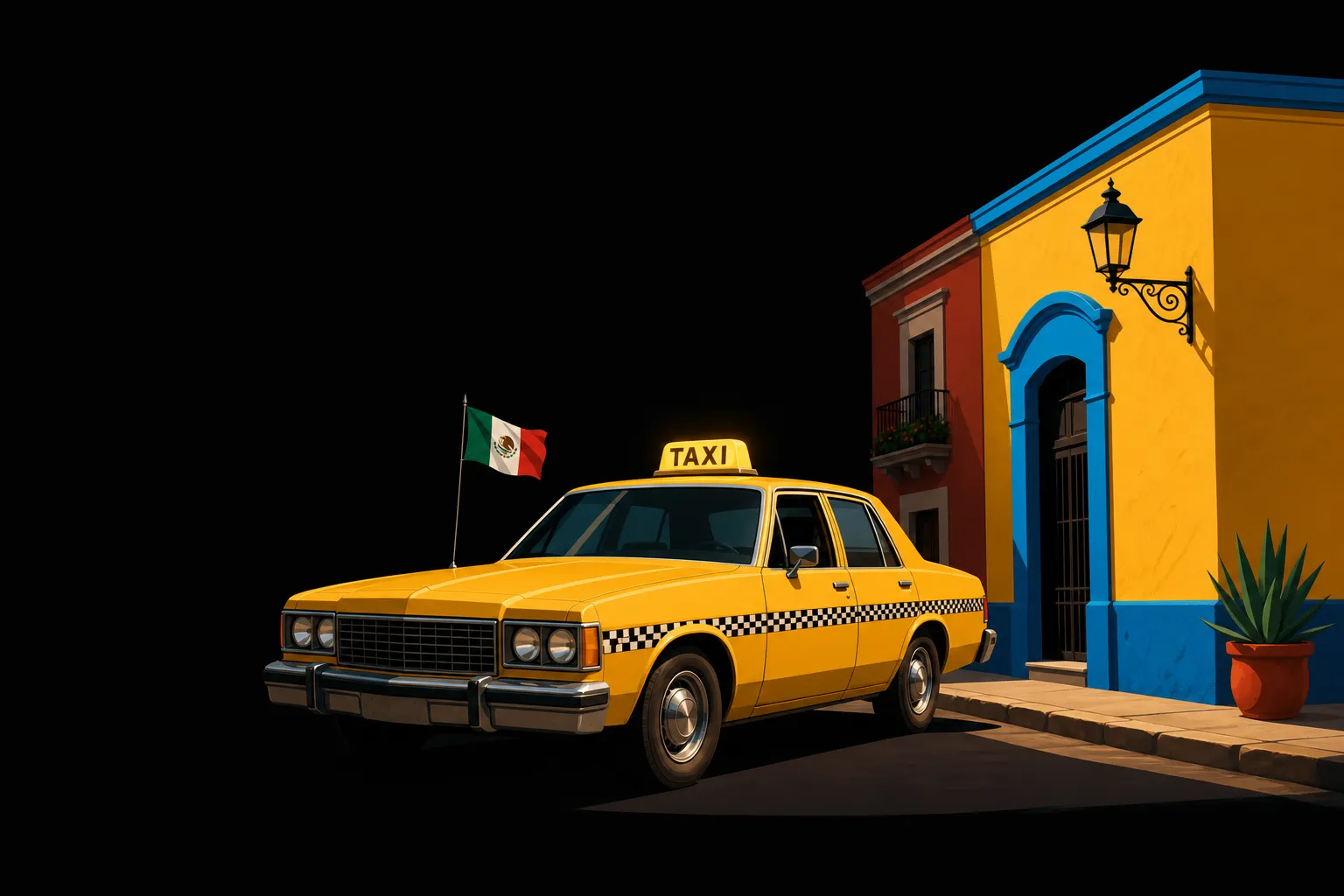
The first time I took a taxi in Mexico City, I got in, said the hotel name, nodded at whatever the driver said, and paid three times the going rate. Not because he was a crook. Because I never asked the price, never confirmed the route, and never understood the question he asked at the end.
A taxi ride is short, but it packs in four separate exchanges: the pickup, the address, the ride itself, and the payment. Each one has two or three phrases that carry the whole thing. Here they are in the order you will need them.
Quiz ahead: At the end of this article a short quiz puts you in the back seat. Question 4 is the one that costs people money.Getting in and asking the price
In most of Latin America you either hail on the street or ask someone to call one for you. In Spain you look for the green light on the roof. Either way, the first thing out of your mouth should be a price question, not a destination.
¿Está libre? (Are you free?)
¿Cuánto cuesta ir al centro? (How much is it to the center?)
¿Tiene taxímetro? (Do you have a meter?)
If there is a meter, you say Con taxímetro, por favor. (With the meter, please.) If there is not, agree on a number before the car moves. The driver will answer with something like Serían doscientos pesos. (That would be two hundred pesos.) You can push back politely with ¿No puede ser un poco menos? (Can it not be a bit less?), and if it works, close with Está bien, vamos. (Okay, let's go.)
Giving the address
Drivers do not want the hotel name. They want a street, a number, and a neighborhood. Spanish addresses usually go street first, then number, then the area.
Voy a la calle Reforma 250, en la colonia Juárez. (I'm going to Reforma Street 250, in the Juárez neighborhood.)
A esta dirección, por favor. (To this address, please.) Say this while holding up your phone. It is the single most useful sentence in this whole guide.
¿Puede seguir el mapa? (Can you follow the map?)
The driver may ask ¿Por dónde quiere que vaya? (Which way do you want me to go?). Unless you know the city, the honest answer is Por donde sea más rápido. (Whichever way is fastest.) If you do know, these four words steer the car:
| Spanish | English |
|---|---|
| Todo recto / Derecho | Straight ahead |
| A la derecha | To the right |
| A la izquierda | To the left |
| En la esquina | At the corner |
Aquí a la derecha, por favor. (Here on the right, please.) Es la casa blanca de la esquina. (It's the white house on the corner.)

Reading is step one. Speaking is what makes it stick.
Practice this in a real conversation, with instant feedback.
During the ride
You do not have to talk. But drivers are often the friendliest Spanish practice you will get all day, and they ask the same three questions everywhere.
¿De dónde eres? (Where are you from?) Answer with Soy de Canadá, pero vivo aquí desde marzo. (I'm from Canada, but I've lived here since March.)
¿Y qué te parece la ciudad? (And what do you think of the city?) Keep it simple: Me encanta, pero el tráfico es terrible. (I love it, but the traffic is terrible.) Every driver on earth agrees with that sentence.
A few phrases you might genuinely need mid-ride:
¿Puede ir un poco más despacio? (Can you go a little slower?)
¿Puede bajar el aire? (Can you turn down the air conditioning?)
Creo que nos pasamos. (I think we went past it.)
Paying and getting out
This is where my Mexico City mistake happened. The driver said ¿Tiene cambio? and I heard a random noise, nodded, and handed over a big bill. He did not have change either. Here is what the end of a ride actually sounds like.
¿Cuánto es? (How much is it?) or ¿Cuánto le debo? (How much do I owe you?)
The driver: Son ciento ochenta. (It's one hundred eighty.)
Then one of these comes at you:
¿Tiene cambio? (Do you have change?) means he wants smaller bills. Reply Solo tengo de quinientos, lo siento. (I only have a five hundred, sorry.) or Sí, tengo suelto. (Yes, I have coins.)
¿Efectivo o tarjeta? (Cash or card?) Answer Con tarjeta, si se puede. (By card, if possible.)
Tipping a taxi driver is not expected in most of Latin America or Spain. Rounding up is plenty. Quédese con el cambio. (Keep the change.) works when the difference is small.
Aquí está bien, gracias. (Here is fine, thanks.) gets you out at the curb. Ask for a receipt with ¿Me da un recibo? (Can you give me a receipt?) if work is paying.
Key takeaway:
- ¿Tiene cambio? is a question about bills, not a request for a tip.
- ¿Cuánto es? before you reach for your wallet, never after.
Don't just memorize it. Say it out loud today.
Nativia turns what you just read into real conversations.
Mini dialogue
Tú: Buenas. ¿Está libre? (Hi. Are you free?)
Taxista: Sí, súbase. ¿A dónde va? (Yes, get in. Where to?)
Tú: A la calle Bolívar 45, en La Candelaria. ¿Cuánto cuesta? (To Bolívar Street 45, in La Candelaria. How much is it?)
Taxista: Unos veinte mil. (About twenty thousand.)
Tú: Está bien. ¿Puede seguir el mapa? No conozco bien la zona. (Okay. Can you follow the map? I don't know the area well.)
Taxista: Claro. ¿Y de dónde es usted? (Sure. And where are you from?)
Tú: De Alemania. Llevo dos semanas aquí. (From Germany. I've been here two weeks.)
Taxista: Llegamos. Son veinte mil. ¿Tiene cambio? (We're here. It's twenty thousand. Do you have change?)
Tú: Sí, aquí tiene. Quédese con el cambio. (Yes, here you go. Keep the change.)
Test yourself
You are in the back seat. Pick what you would actually say or understand at each moment.
Choose the best option at each step of the ride, then check your answers.
1.The taxi stops next to you. What do you ask before getting in?
2.Voy calle Reforma 250.
I'm going to Reforma Street 250.
3.The driver asks: ¿Por dónde quiere que vaya? You don't know the city. What do you say?
4.At the end the driver says: ¿Tiene cambio? What does he want?
5.¿Puede ir un poco más ?
Can you go a little slower?
6.You want to get out at the curb right here. Which one?
Taxi phrase cheat sheet
Taking a taxi in Spanish
| Moment | Spanish | English |
|---|---|---|
| Hailing | ¿Está libre? | Are you free? |
| Hailing | ¿Cuánto cuesta ir a...? | How much is it to...? |
| Hailing | ¿Tiene taxímetro? Con taxímetro, por favor. | Do you have a meter? With the meter, please. |
| Hailing | ¿No puede ser un poco menos? | Can it not be a bit less? |
| Address | A esta dirección, por favor. | To this address, please. |
| Address | Voy a la calle... número..., en... | I'm going to ... Street number ..., in ... |
| Address | ¿Puede seguir el mapa? | Can you follow the map? |
| Directions | Todo recto / A la derecha / A la izquierda | Straight / Right / Left |
| Directions | En la esquina, por favor. | At the corner, please. |
| Directions | Creo que nos pasamos. | I think we went past it. |
| Ride | ¿Puede ir un poco más despacio? | Can you go a little slower? |
| Ride | Soy de..., llevo ... semanas aquí. | I'm from..., I've been here ... weeks. |
| Paying | ¿Cuánto es? / ¿Cuánto le debo? | How much is it? / How much do I owe you? |
| Paying | ¿Tiene cambio? Solo tengo de quinientos. | Do you have change? I only have a five hundred. |
| Paying | Con tarjeta, si se puede. | By card, if possible. |
| Paying | Quédese con el cambio. | Keep the change. |
| Getting out | Aquí está bien, gracias. | Here is fine, thanks. |
| Getting out | ¿Me da un recibo? | Can you give me a receipt? |
Rehearse this exact situation before it happens
Play the scene in Nativia as often as you like, so the right words are there when you need them for real.
FAQ
Do I use tú or usted with a taxi driver?
Default to usted. Drivers are strangers doing a service job, and usted is the safe register everywhere from Madrid to Buenos Aires. If the driver switches to tú with you, feel free to follow.
Should I tip taxi drivers in Spanish-speaking countries?
Usually no. In Mexico, Colombia, Argentina and Spain, rounding up to the nearest convenient bill is standard. A tip is only expected if the driver helped with heavy luggage or waited for you.
How do I say Uber or a ride app in Spanish?
People just say Uber, Didi or Cabify by name. Pedir un Uber (to order an Uber) is the phrase. The address and payment happen in the app, but drivers still ask ¿Por dónde quiere que vaya? and make the same small talk, so the phrases above apply.
Keep reading
Buying a SIM Card in Spanish: Phrases From Counter to Signal
Buying a SIM card in Spanish made simple: the phrases to ask for a prepaid plan, hand over your passport, pick data, and get your number working, plus a quiz.
At the Pharmacy in Spanish: Phrases From Symptom to Dosage
Learn the Spanish pharmacy phrases you need: describe symptoms, ask for medicine, understand dosage instructions, plus a dialogue, quiz and cheat sheet.
Ordering at a Restaurant in Spanish: Phrases From Table to Bill
Ordering at a restaurant in Spanish, step by step: getting a table, ordering food and drinks, asking for the bill, and what the waiter will say back.