Pretérito vs Imperfecto: The Spanish Past Tense Rule That Clicks
Pretérito vs imperfecto explained with real examples, the traps that trip English speakers, a quick self-test and a downloadable cheat sheet.
Nativia Team
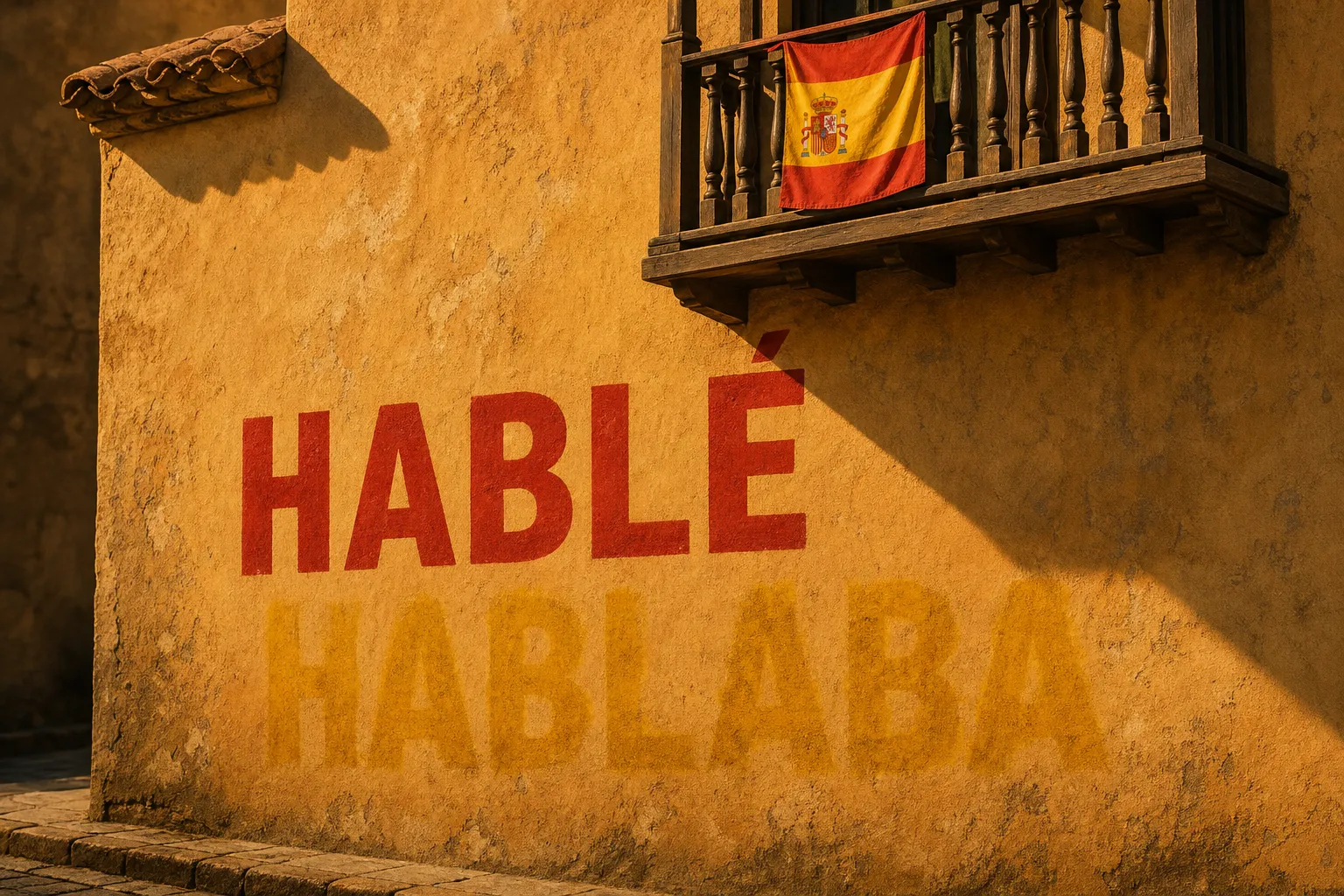
English has one simple past. "I ate" covers everything. Spanish makes you choose between comí and comía every single time, and in the moment both feel right. I spent my first months in Mexico guessing, until I stopped memorizing trigger words and started asking one question: am I pointing at an event, or painting a scene?
Quiz ahead: A short self-test waits at the end of this article. Question 4 catches almost everyone, because the English translation lies to you.Pretérito: the event that happened and ended
Use the pretérito when the action has edges. It started, it finished, and you are reporting it as a done thing. That includes single events, a chain of events in order, and anything that happened a counted number of times or for a closed period.
Ayer comí tacos con mi hermana. (Yesterday I ate tacos with my sister.)
Llegué, pagué y me fui. (I arrived, I paid, and I left.)
Vivimos en Bogotá tres años. (We lived in Bogotá for three years.)
That last one surprises people. Three years is long, but the period is closed and counted, so it is one finished block. Pretérito.
Imperfecto: the background and the habit
Use the imperfecto when the edges do not matter. You are describing how things were, what used to happen, or what was going on in the background. Weather, age, time of day, feelings, scenery, and repeated routines all live here.
Cuando era niño, íbamos a la playa cada verano. (When I was a kid, we went to the beach every summer.)
Hacía calor y la calle estaba llena de gente. (It was hot and the street was full of people.)
Eran las diez y todavía trabajaba. (It was ten o'clock and I was still working.)
None of these tell you when the action began or ended. Nobody asks. That is the whole feel of the imperfecto.

Reading is step one. Speaking is what makes it stick.
Practice this in a real conversation, with instant feedback.
When both tenses share a sentence
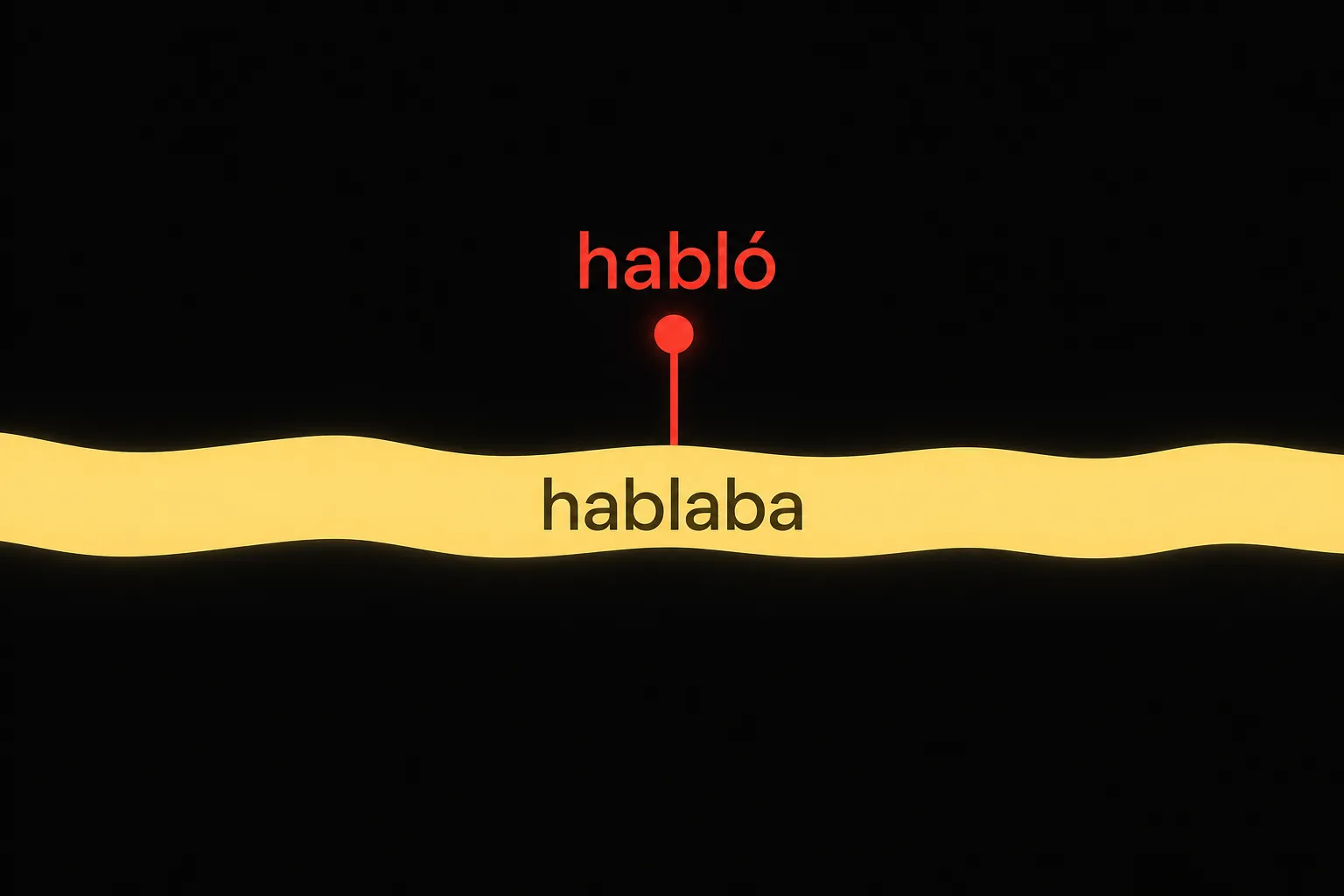
This is where the system pays off. The imperfecto sets the stage, and the pretérito walks in and does something. Spanish speakers combine them constantly, and once you hear the pattern you cannot unhear it.
Dormía cuando sonó el teléfono. (I was sleeping when the phone rang.)
Caminábamos por el centro y de repente empezó a llover. (We were walking downtown and suddenly it started to rain.)
Mi abuela siempre decía que un día me casaría, y el año pasado me casé. (My grandmother always said that one day I would get married, and last year I did.)
Key takeaway:
- Pretérito reports what happened: an event with a start or end, a sequence, a counted period.
- Imperfecto describes how it was: ongoing background, habits, descriptions, with no endpoint in focus.
Common traps
Verbs that change meaning
A handful of verbs shift meaning between the two tenses, and these cause the most embarrassing mistakes. Conocía a Luis means you already knew him. Conocí a Luis means you met him for the first time.
| Verb | Pretérito | Imperfecto |
|---|---|---|
| saber | supe (I found out) | sabía (I knew) |
| conocer | conocí (I met) | conocía (I knew, was familiar with) |
| querer | quise (I tried to) / no quise (I refused) | quería (I wanted) |
| poder | pude (I managed to) | podía (I was able to, in general) |
| tener | tuve (I got, received) | tenía (I had) |
English "would" is not the conditional
"Every Sunday we would go to the market" sounds conditional, but it describes a past habit. That is the imperfecto: Cada domingo íbamos al mercado. If you reach for iríamos, you have just said something about a hypothetical future.
A long duration does not force the imperfecto
Learners hear "for five years" and switch to the imperfecto by reflex. Length is irrelevant. What matters is whether the period is closed. Estudié español cinco años (I studied Spanish for five years) is a finished block. Estudiaba español cuando la conocí (I was studying Spanish when I met her) is background to an event.
Don't just memorize it. Say it out loud today.
Nativia turns what you just read into real conversations.
Self-test: pretérito or imperfecto?
Read each sentence as a scene and decide whether you are pointing at an event or painting the background.
Pick the right past tense in each sentence, then check your answers.
1.Anoche una película con mis amigos.
Last night I watched a movie with my friends.
2.Cuando pequeña, mi familia vivía en Lima.
When I was little, my family lived in Lima.
3.Which sentence means you met Carla for the first time?
4.Trabajé en ese restaurante dos años.
I worked at that restaurant for two years.
5.Every Saturday we would eat at my grandmother's house. Which is correct?
6.Estábamos en la playa cuando a llover.
We were at the beach when it started to rain.
Cheat sheet: pretérito vs imperfecto at a glance
Pretérito vs imperfecto at a glance
| You want to express | Tense | Example |
|---|---|---|
| A single completed event | pretérito | Ayer comí tacos. (Yesterday I ate tacos.) |
| A sequence of events in order | pretérito | Llegué, pagué y me fui. (I arrived, paid and left.) |
| A closed, counted period | pretérito | Vivimos en Bogotá tres años. (We lived in Bogotá for three years.) |
| The event that interrupts a scene | pretérito | Sonó el teléfono. (The phone rang.) |
| A past habit or routine | imperfecto | Íbamos a la playa cada verano. (We went to the beach every summer.) |
| Description: weather, age, time, feelings | imperfecto | Hacía calor y eran las diez. (It was hot and it was ten o'clock.) |
| Background action in progress | imperfecto | Dormía cuando sonó el teléfono. (I was sleeping when the phone rang.) |
| To meet someone (conocer) | pretérito | Conocí a Luis. (I met Luis.) |
| To already know someone (conocer) | imperfecto | Conocía a Luis. (I knew Luis.) |
| To find out (saber) | pretérito | Supe la verdad. (I found out the truth.) |
| To know a fact (saber) | imperfecto | Sabía la verdad. (I knew the truth.) |
Practice this grammar in real conversations
Rules only stick when you use them. Practice them in real conversations in Nativia and get instant grammar feedback after every message.
FAQ
Is the imperfecto the same as "was doing" in English?
Often, but not always. "I was sleeping" maps neatly to dormía, but "I used to live" and "I lived" (as a description) are also imperfecto. Think of it as "how things were" rather than one English form.
Which tense do I use with "ayer" or "la semana pasada"?
Usually the pretérito, because a specific time stamp frames the action as a finished event. The exception is description inside that day: Ayer hacía frío (Yesterday it was cold) is imperfecto, because you are describing the weather, not reporting an event.
What if I pick the wrong one? Will people understand me?
Almost always, yes. The meaning only really shifts with verbs like conocer, saber, querer and poder. Everywhere else the wrong tense sounds slightly off, like saying "I was eating a taco yesterday" when you mean you ate one. Native speakers will still get it, so keep talking and let the pattern settle through use.
Keep reading
Pretérito vs Imperfecto: When to Use Each Past Tense
Pretérito vs imperfecto explained without textbook jargon: clear rules, real examples, the traps that change meaning, plus a quiz and cheat sheet.
Qué vs Cuál: When Spanish Has Two Words for 'What'
Qué vs cuál confuses every English speaker because both mean what or which. Learn the real rule, the noun trap, and test yourself with a short quiz.
Saber vs Conocer: Two Ways to Say 'Know' in Spanish
Saber vs conocer explained with real examples, the traps that catch English speakers, a quick self-test and a downloadable cheat sheet for Spanish learners.