The Shadowing Method for Spanish: A 4-Week Plan That Works
Learn the shadowing method for Spanish step by step: a realistic 4-week plan with daily 15-minute sessions that fix your accent, rhythm and speaking speed.
Nativia Team
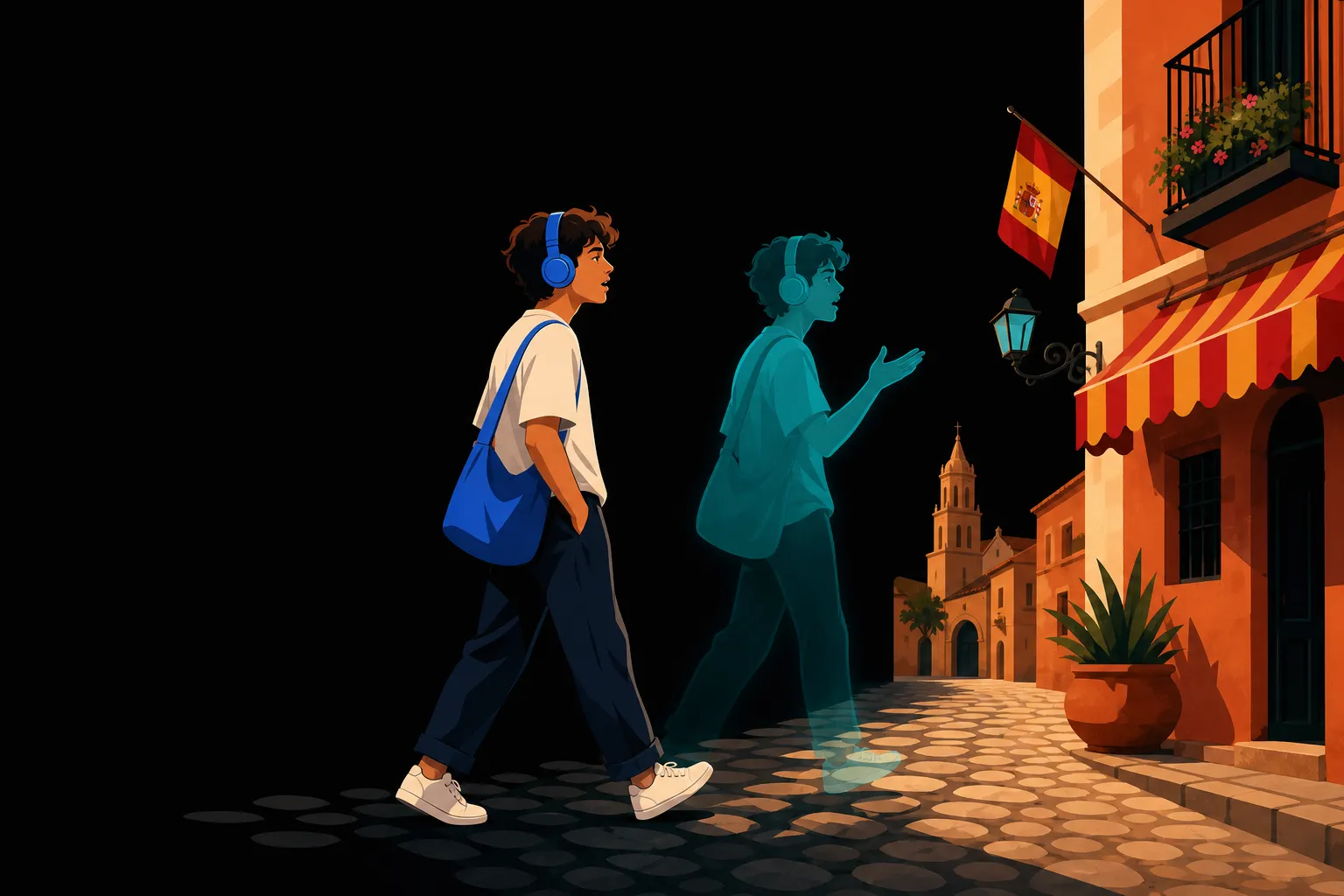
When I lived in Guadalajara I could read a menu, write a decent email and still get ¿Cómo? (What?) three times in a row at the taco stand. My Spanish was fine on paper. My mouth was just slow and flat, and nobody could follow the rhythm.
Shadowing fixed that faster than anything else I tried. It is not glamorous. You listen to a native speaker and talk over them, a half second behind, copying every rise, drop and pause. Here is the exact 4-week plan I wish someone had handed me.
Quiz ahead: A short quiz at the end checks whether you really understood how shadowing works. Question 2 catches most people.What shadowing actually trains
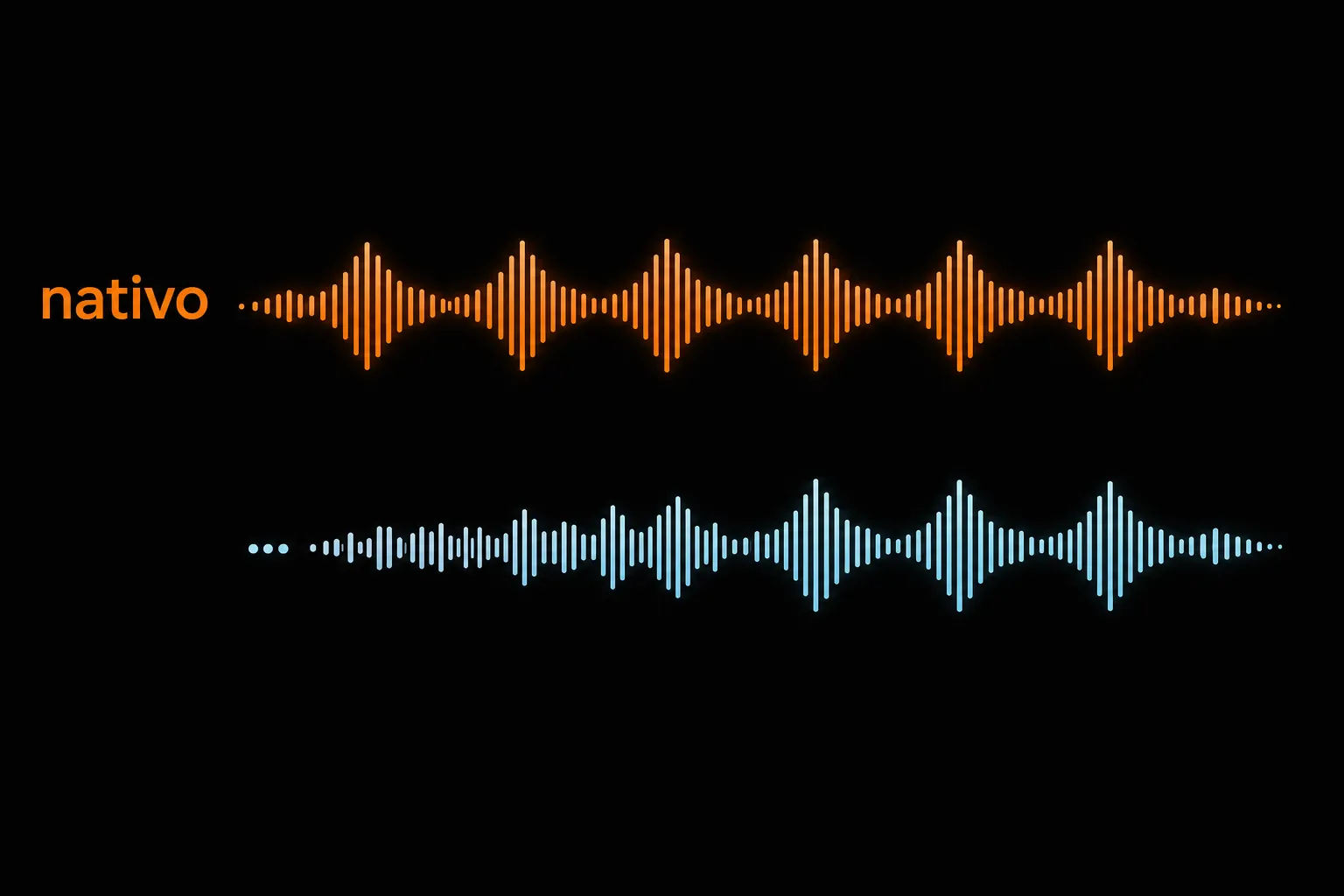
Shadowing is not listening comprehension and it is not reading aloud. You repeat speech while it is still playing, so your mouth has to produce Spanish at native speed with native melody. Your brain does not get time to translate.
Three things improve almost on their own:
- Rhythm. Spanish gives every syllable roughly the same length. English does not. Shadowing beats this into your mouth.
- Linking. Natives say mis amigos (my friends) as "mi-sa-mi-gos". You start doing it without thinking.
- Speed. After a few weeks, normal conversation speed stops feeling like an attack.
Picking the right audio
Bad audio kills the method. You need three things: one clear speaker, a transcript, and clips between 30 seconds and 2 minutes.
| Source | Good for | Skip if |
|---|---|---|
| Podcast transcripts (Españolistos, Hoy Hablamos) | Clean speech, natural pace | You hate the host's voice |
| YouTube with accurate captions | Specific accent (Mexican, Argentine, Spanish) | Captions are auto-generated |
| Audiobook samples | Slow, perfect diction | You need conversational Spanish |
| TV show scenes | Real slang and speed | No subtitles in Spanish available |
Pick one accent and stick to it for the full 4 weeks. Mixing a Madrid podcast with a Bogotá YouTuber confuses your mouth about where the music goes.

Reading is step one. Speaking is what makes it stick.
Practice this in a real conversation, with instant feedback.
The 4-week plan, 15 minutes a day
Every session uses the same clip for the whole week. Repetition is the point. By Friday you should know the clip better than the host does.
Week 1: Listen and mumble
Days 1 and 2: listen to the clip five times with the transcript open. Mark every spot where the speaker links words together or drops a sound.
Days 3 to 7: play the clip and mumble along, half a second behind. Do not try to be clear. You are catching the melody, not the consonants. If you fall off, keep going and jump back in at the next sentence.
Week 2: Full voice, short chunks
Now you shadow out loud at normal volume, but only 10 to 15 seconds at a time. Play, shadow, pause, repeat the chunk three times, move on.
Record yourself once on Day 4. Play it next to the original. Most people hear the same problem: their Spanish sounds choppy because they stress syllables English-style. Notice it, do not fix it yet.
Week 3: Whole clip, no pausing
Shadow the entire clip from start to finish without stopping. If you lose the thread, skip a phrase and catch up. Do this three times per session, then once more with the transcript closed.
Add one extra step: say the hardest sentence from the clip ten times on its own at the end. In my case that was Lo que pasa es que no tengo tiempo. (The thing is I don't have time.) That little lo que pasa es que is pure Spanish rhythm and it sounds nothing like it looks.
Week 4: Shadow, then speak without the net
This is where most guides stop, and it is where the real payoff starts. Shadowing makes your mouth fast, but it does not make you choose words. You need to take the rhythm you built and use it on your own sentences.
Spend 10 minutes shadowing as in Week 3. Then spend the last 5 minutes talking without audio. Pick a scenario that matches your clip's topic and run it in Nativia, like ordering at a café or explaining why you were late. Pay attention to one thing only: does your rhythm still sound like the clip, or does it collapse back into English stress the moment you improvise?
It usually collapses the first few days. By the end of the week it mostly holds. That is the whole method working.
Mistakes that waste your 15 minutes
Reading instead of listening. If your eyes are glued to the transcript by Week 3, you are reading aloud, not shadowing. Close it.
Changing clips every day. Novelty feels productive. It is not. Ten reps of one clip beat one rep of ten clips.
Whispering. Your mouth muscles need to actually work. Shadow at the volume you would use with a friend across a table.
Skipping the recording. Nobody likes hearing their own voice. Do it anyway, once a week. It is the only honest feedback you get without a native in the room.
Don't just memorize it. Say it out loud today.
Nativia turns what you just read into real conversations.
Self-test: do you get the method?
Pick the right answer for each question, then check.
Pick the right option for each question, then check your answers.
1.When shadowing, you speak the native audio.
2.How often should you switch to a new clip?
3.A native says mis amigos. How does it sound in connected speech?
4.Shadowing is a good way to learn new vocabulary.
5.In Week 4 the last 5 minutes are for .
The plan at a glance
Spanish shadowing: 4-week plan
| Week | Daily session (15 min) | Goal |
|---|---|---|
| 1 | Listen 5x with transcript, then mumble along half a second behind | Catch the melody, not the consonants |
| 2 | Shadow out loud in 10-15 second chunks, 3 reps each. Record yourself on Day 4 | Full voice, notice English-style stress |
| 3 | Shadow the whole clip 3x, once more with transcript closed, hardest sentence 10x | Keep up at native speed without pausing |
| 4 | Shadow 10 min, then 5 min speaking freely on the same topic (e.g. a Nativia scenario) | Carry the rhythm into your own sentences |
Make speaking practice a daily habit
Nativia turns practice into an interactive story you'll want to come back to every day.
FAQ
Does shadowing work if my level is A1?
Not well. You will be copying sounds without knowing where one word ends and the next begins. Learn basic vocabulary and present tense first, then start shadowing around A2.
How long until I notice a difference?
Most people hear it in their own recordings by the end of Week 2. Natives notice it around Week 4, usually as "your Spanish sounds more natural" rather than "your accent is gone".
Should I shadow with or without the transcript?
Both, in that order. Use it in Week 1 and 2 to catch linking and dropped sounds. Close it from Week 3 on, otherwise you are reading aloud and your ears stop doing the work.
Keep reading
The Island Method for Spanish: 5 Stories That Rescue Any Chat
The island method for Spanish explained: build 5 short personal monologues in 2 weeks so you always have something to say in a real conversation.
Talk to Yourself in Spanish: A 3-Week Plan That Builds Fluency
A 3-week self-talk plan to learn Spanish speaking at home: daily narration drills, realistic time budgets, and how to get feedback so mistakes don't stick.
Learn Spanish in 20 Minutes a Day: A Weekly Plan That Works
A realistic plan to learn Spanish in 20 minutes a day: a fixed daily block, a weekly rotation, and a speaking habit you can keep for months.